>
How will chatGPT help businesses achieve real-time outcomes by turning it into a useful tool?

There was an independent influence of OpenAI nearly a few years back. Initially, there was a fear of whether it would take over the world but later on, we came to know that it would again start with the world of art afterwards without doubt seamlessly. For instance, check how chatGPT can help business get positive real time outcome and leverage its power to grow business.

Chatbot is an AI-powered. ChatGPT came to dominate our social media by providing more conversational assistance. But later on, GPT-3 termed ChatGPT originated from an internet well-known language processing AI model.

ChatGPT Influence

As most of you have realized, in a short span of time, there is an additional feature that has incorporated in your android phones. The feature will produce the result according to your thinking, imagination and conversation. The majority of people now have got an idea about the OpenAI functionality. Businesses can improve their relationship-maintenance sectors such as customer support and engagement with potential audiences to expand hugely at this time and furthermore.

AI-powered chatbot

In this hectic world, no one is ever ready to wait for a response whatever may be the situation. Everybody needs immediate response and exactly that’s what AI-powered chatbot which is chatGPT serves us. ChatGPT can improve the customer experience by giving immediate and accurate responses to customer inquiries through efficient language processing and OpenAI technology. It can contribute an immersed assistance to content marketers to develop naturally generated content as same as manually done.

Did you know that ChatGPT can bloom wonders in your business?

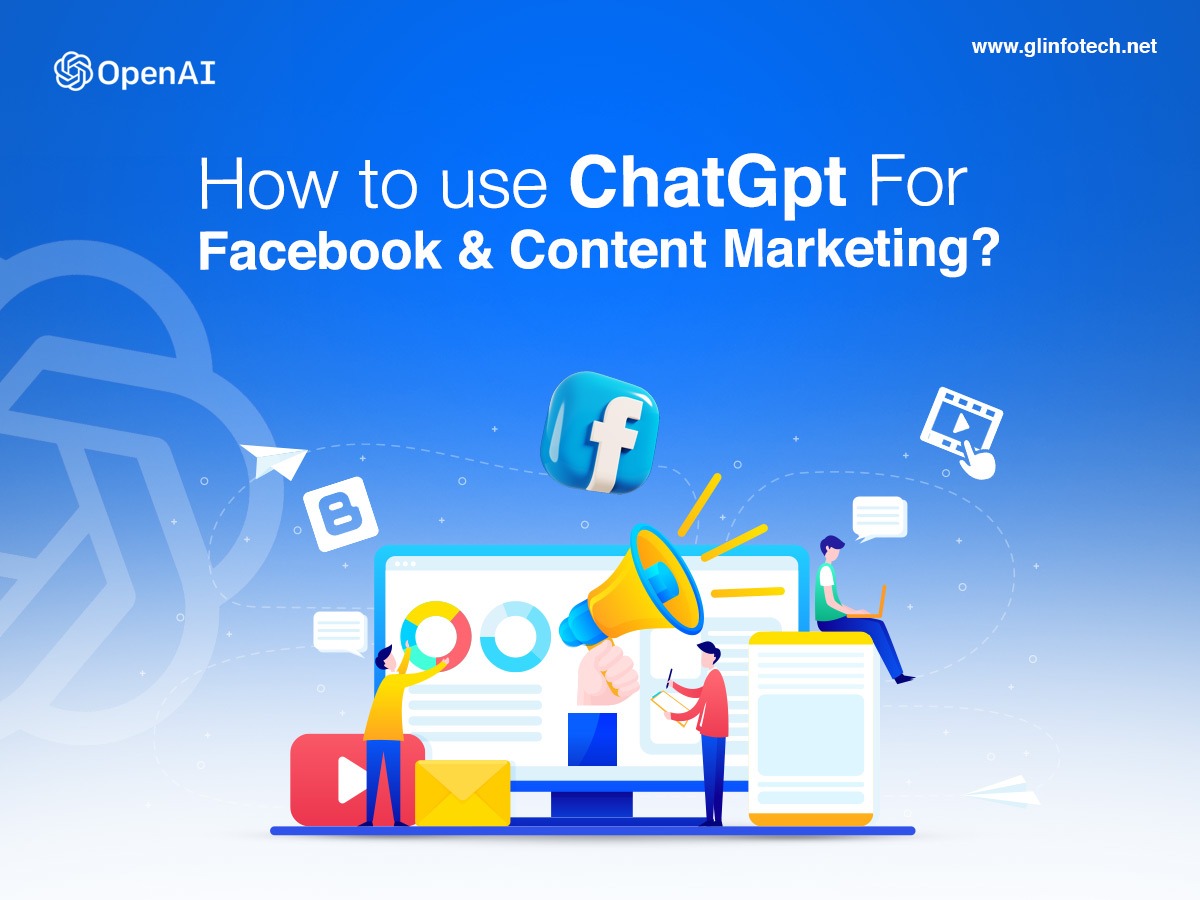
How to use chatGPT for Facebook and content marketing

The power of ChatGPT is more than you can imagine. It is developed by OpenAI which eventually generates human-like text which is accessible through our smartphones through voice, by typing language which can predict the remaining text as well. It can be used in various applications, concisely and more significantly using Facebook social media. A ChatGPT can handle a number of queries simultaneously and can give answers in real time unless it knows it cannot. In the long run. setting up OpenAI at the forefront of every business would create a huge investment. ChatGPT can gather information and can assist with customer support at appropriate times.peoples announce how ChatGPT help content marketing
What is the purpose of chatbot development?

Like robots, it is a type of bot that can predict according to your sensational vibes. It supports customers with a set of prebuilt answers as a natural conversation on Facebook and so on. On account of these, ChatGPT can increase lead generation, customer acquisition and other types of interactions.

What is the role of ChatGPT in the content generation?

ChatGPT can help to create a highly indulging and engaging content generation which can attract most readers with high-quality structure and impressive sentence construction that can help Facebook messengers, advertisements and other types of content.A lady making contents from ChatGPT
How will ChatGPT assist in language translation?

Many indigenous people like to gather information in their accents through various social media platforms. Fortunately, it is accomplished by the ChatGPT-3 which can translate text from one language to another. It is useful for creating multilingual Facebook campaigns.

How ChatGPT can do audience targeting?

AI-powered Chatbot powered the ChatGPT by training it with conditional formatting and sequential recognition of an impulsive audience through its intelligence. According to text input into the Chatbot, it can identify the audience and so easily target the right audience.

Finally, one of the most important things is that, to get access to this Chatbot GPT in Facebook marketing. You will have to get access to Chatbot GPT-3 API and extensive knowledge about its usability. You should have comprehensive knowledge about the API integrations. The developer team can more precisely do it and have to adhere to Facebook policies and guidelines.

Web Design & Development Ecommerce Web Development ERP Software Development

Mobile App Development Digital Marketing SEO Graphic Design

Latest Blogs
How Google’s View-Through Conversion Update Impacts Demand Gen Campaigns
Your Best Visual Ads Are Probably Getting Zero Credit — Here's Why If you've ever run a video or social ad campaign that felt like it was working—brand searches ticking up, direct traffic climbing—but your conversion reports showed almost nothing, you're not imagining things. The ads were working. Your attribution just couldn't see it. This is one of the most frustrating gaps in modern paid media, and it's more common than most teams realize. The Way Automated Ad Systems Actually Work Traditional search advertising made sense on the surface: someone clicks your ad, they convert, you count it. Clean, simple, measurable. But visual and video ads on discovery platforms don't work that way, and the automated systems running them know it. Today's machine learning models aren't just looking at who clicked. They're watching how impressions influence behavior down the line. Someone sees your ad while scrolling, doesn't click, then searches your brand name two days later and buys. That's a real conversion. Click-only tracking just never gave it to you. The shift here is important: if you're only feeding click data back into your automated bidding, you're essentially training the algorithm on an incomplete picture. It'll optimize for the wrong thing—and your costs will reflect that. Why Clicking Isn't the Full Story Anymore Here's what I keep seeing with brands stuck in click-only measurement: their awareness campaigns look like they're underperforming, budgets get cut, and then branded search quietly drops a few weeks later. The connection gets missed entirely. The paid media efforts that actually scale in visual ecosystems tend to do a few things differently: They track the full path, not just the last click They feed micro-conversions (page visits, add-to-carts, time on site) back to the algorithm They set sensible lookback windows—usually tight, like a 1-day VTC window—to keep data clean They use cross-channel reporting that actually reflects how people buy None of this is complicated in theory. It's just a different way of thinking about what "a conversion" means. View-Through Conversions — What They Are and Why They Matter View-Through Conversion (VTC) tracking captures the people who saw your ad, didn't click, but came back later and converted anyway. It sounds simple, but most advertisers either ignore it or set it up badly. Done right, it closes a huge blindspot. Done wrong—with lookback windows set too wide—it inflates your numbers and makes bad campaigns look good. The goal isn't to claim credit for everything. It's to give your bidding system accurate enough data that it can find more of the right people. A few things that genuinely help here: Micro-conversion tracking so the algorithm has signals even before a purchase happens Creative variations that let you test what actually moves people through the funnel First-party data fed cleanly into the platform Conversion lift studies if you really want to prove incremental impact What a Proper VTC Strategy Looks Like The brands getting this right aren't doing anything exotic. They've just accepted that the buyer journey is messy and built their measurement around that reality instead of forcing messy data into a clean click-based model. Practically, that means reviewing your conversion windows regularly, setting up view-based tracking alongside your standard events, and using tools like clean rooms or lift tests to validate whether your impressions are actually driving incremental results — not just claiming coincidental ones. Where Visual Advertising Is Headed Brands that keep judging video and social campaigns by click-through rates alone are going to keep undervaluing them — and eventually underfunding them. The platforms have already moved on. The algorithms are already optimizing for full-funnel signals. The question is whether your measurement setup is keeping up. The teams that adapt to view-inclusive, automated frameworks now will have a serious edge. Not because the technology is magic, but because they'll actually understand what's working—and be able to scale it confidently.
May 27, 2026
The AI Citation Gap: Why ChatGPT Rarely Credits Reddit Sources
Why Your Content Isn't Showing Up in AI Search (And What to Do About It) Have you noticed how some online communities become go-to knowledge sources while others just... fade out? It's not random. As search behavior shifts faster than most of us can keep up with, the rules for getting found online are quietly being rewritten. Traditional SEO isn't dead, but honestly, it's not enough on its own anymore. AI-powered search has changed what "good content" actually means — and if your strategy still revolves around keyword counts and backlinks, you're probably already feeling the gap. AI Search Doesn't Think Like Google Used To Old-school SEO was pretty mechanical — stuff the right keywords in, earn some backlinks, climb the rankings. AI search is different. It's trying to understand why someone is searching, not just what they typed. That means a few things matter more now: How clearly you explain your topic — vague or surface-level content gets passed over Whether your page structure makes sense — schema markup actually helps AI understand what your content is for Whether you're writing for people — keyword stuffing actively works against you now Great Content Alone Won't Cut It Here's something that surprised me when I first looked into this: quality content by itself isn't a ranking guarantee anymore. What AI search engines are really evaluating is semantic relevance — basically, how well your content fits the full picture of what a user is trying to figure out. The sites that do well tend to cover topics thoroughly — not just the main keyword, but the related questions, the adjacent subtopics, the conversational phrases people actually use when they search. Think less "target keyword" and more "does this page genuinely help someone?" Intent Matters More Than Keywords If someone searches "how do I cite a Reddit post" or "best tools for digital marketing," they're not looking for a page that repeats those phrases 15 times. They want a real answer, in plain language, that actually moves them forward. Your content strategy should be built around answering genuine questions. A few things that help AI understand your content better: FAQs that address what people actually ask Contextual headings that guide the reader Structured data so search engines can parse your page properly Subtopics that fill in the gaps around your main subject Building an SEO Strategy That Actually Works Now The shift isn't that complicated once you accept it: stop optimizing for search engines and start genuinely helping your readers. That means answering real questions instead of padding for keyword density, organizing your content so it's easy to skim and navigate, and going deep on topics rather than skimming the surface. Brands that do this naturally earn the credibility that AI search rewards. Where This Is All Heading If you're still chasing rankings the old way, it's going to get harder. The sites that will win going forward are the ones people actually trust — the ones with clear, thorough, context-rich content that treats readers like intelligent adults. Keywords still matter, but they're a small piece of a much bigger picture now. The real question isn't "did I use the right phrase enough times?" — it's "did I actually help someone?" Get that right, and the visibility tends to follow. FAQ's What does "citation" mean? A citation in digital platforms refers to the explicit credit, link, or mention given to an original source when its content is utilized within AI generated answers.  What is the difference between retrieval and citation in AI search?  Retrieval involves the AI pulling data into its backend knowledge base for knowledge extraction, whereas citation is the visible act of explicitly linking out to that source for the user. Does ChatGPT use Reddit data in its answers?  Yes, AI models leverage massive amounts of forum data for knowledge extraction, but they often summarize the information in a zero-click search format without providing a direct reddit citation. How does content structure affect AI citation chances?  Good website performance, structured headings, and organized formatting help AI search platforms understand, rank, and display your content more effectively in search results. What type of content is most likely to be cited by AI?  Platforms like Google AI Overviews and Bing AI prioritize content that answers user questions clearly, provides genuine value, and features easy-to-understand, authoritative data.
May 23, 2026
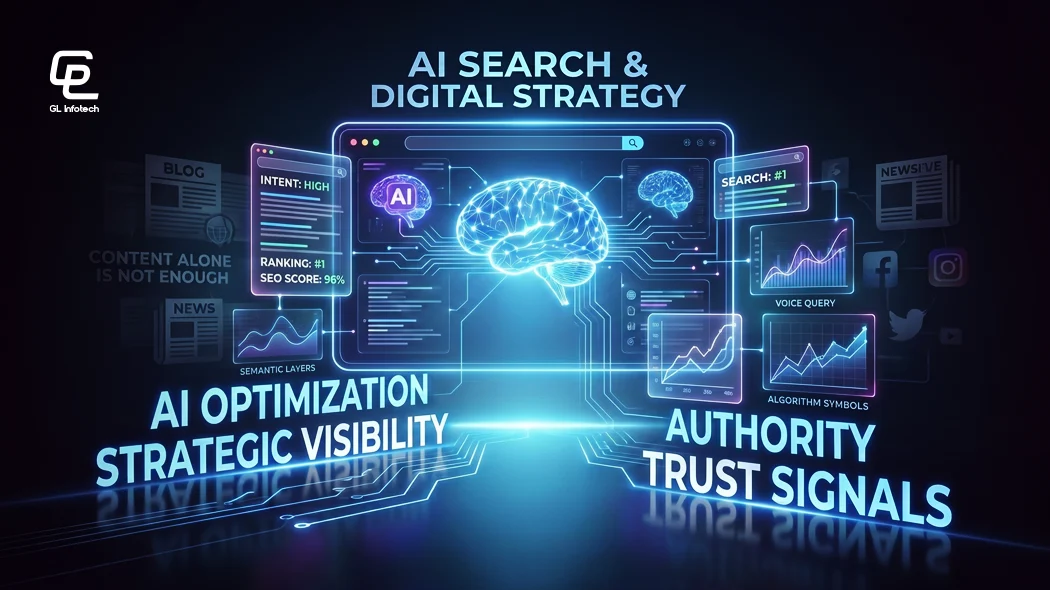
Why Great Content Is No Longer Enough & What Beats It In AI Search
There was a time when ranking high meant your content would consistently reach searchers. Well, think again. Search visibility no longer works that way. Great content is no longer enough, because AI search engines now rank websites based on their contextual relevance and subject matter instead of using basic keyword metrics.  So, if you are still sticking to old-school SEO techniques believing they will get your website ranked, it is high time you made a few strategic changes to your semantic SEO strategy.  Why AI Search Thinks Differently If keyword matching and backlinks were the constraints that defined the visibility in traditional seo formats, today’s AI-powered search engines evaluate the intent behind a search query. Instead of merely scanning for repeated keywords, they examine how clearly the topic of the content is explained. The addition of schema markup enables search engines to comprehend how contents are organized and how it benefits users. With this approach, both content creators and readers benefit equally, leaving little room for keyword stuffing or other outdated SEO practices.  What Beats Great Content Today? Beyond keyword matching, what matters the most is semantic relevance i.e how true or relevant is the body of content. Websites that perform well in AI search usually provide: Clear topic structure Related subtopics and supporting information User-focused answers Natural keyword variations Strong topical authority For example, an article about “Fitness Training” should include workout routines, strength building and related topics, whereas an article about “Digital Marketing” must cover SEO, content marketing, social media strategy, and other key areas of the subject. The Importance of User IntentModern search engines have evolved from relying solely on exact-match keywords to becoming increasingly intent-driven. Apparently, the rankings reflect this shift.  So, what is the takeaway from this shift? Your content strategy should give importance to answering real questions and focus less on keyword counts. Elements such as FAQs, contextual headings, informative subtopics and structured data SEO help AI-powered search engines comprehend content in a better way. The Future of Search VisibilityBrands that still follow outdated SEO methods may find it difficult to compete in advancing search environments. Hence, semantic SEO is now an essential element of contemporary content strategy and cannot be considered optional. The future belongs to websites that build credibility by creating appropriate content instead of tracking individual keywords. Alongside context-rich and intent-focused content, organizations must apply effective content distribution to improve visibility across digital platforms. Brands that adapt early will have a stronger chance of remaining visible in AI-powered search results. Stay Relevant, Rank Better The changing nature of search algorithms means that today’s successful strategies may not stay effective forever. The present nature of AI search is to rank those websites or content that contain valuable information. Hence, corporations aspiring to rank at the top of Google search results must create purposeful and well-organized content instead of depending on outdated SEO methods. At Glinfotech, we help brands climb higher in Google rankings through expert, result-driven SEO strategies designed for modern AI-powered search environments. FAQ'S Why is great content no longer enough for SEO?Great content alone is no longer enough for SEO because AI search engines now understand, summarize and present information directly to users.   What matters more than content in AI search? In AI search, brand trust, digital footprint authority, and entity visibility matter significantly more than written content.  What is content retrievability in AI search? Content retrievability in AI search refers to how easily AI systems can find, understand, and use your content. How can you optimize content for AI search?  You can optimize content for AI search by creating context-rich and user-focused content.  How does content distribution impact AI search visibility? Content distribution improves AI search visibility by helping your content reach more platforms, audiences and websites. 
May 15, 2026
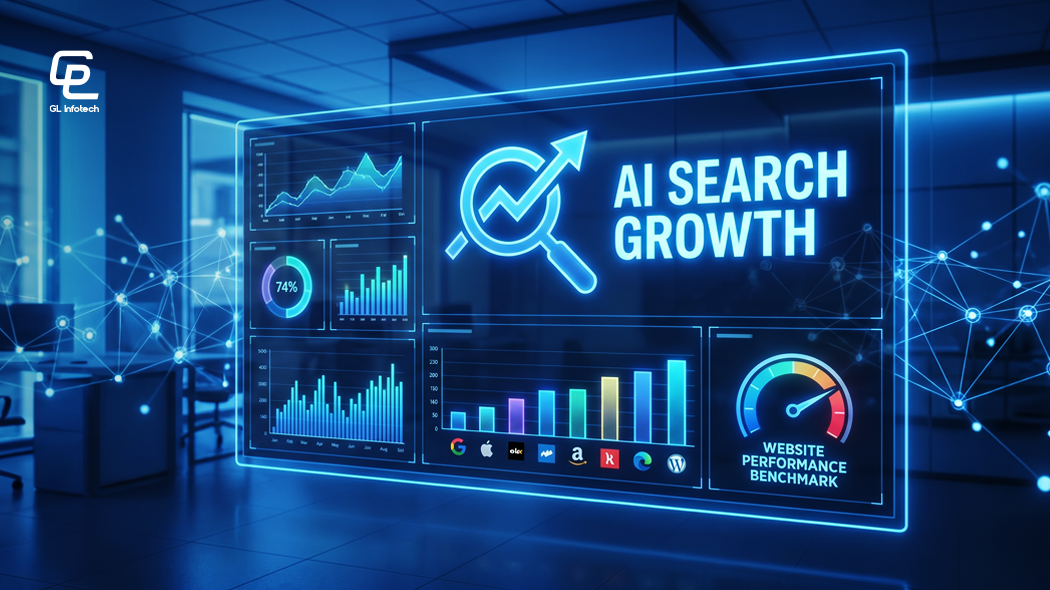
AI Search Growth: How To Benchmark Website Performance In Your Industry
Have you ever wondered why some websites consistently appear in AI generated search results while others struggle to gain visibility? As search behaviour continues to change rapidly, businesses are now paying closer attention to how websites perform across AI driven search platforms. Traditional SEO still plays an important role, but AI search optimization has become equally important as search engines and AI tools continue to provide more direct and personalized answers to users. The answer often comes down to having a strong AI SEO strategy supported by proper keyword performance tracking and regular website analysis. Businesses that understand how their website performs compared to competitors are usually in a better position to improve rankings, increase visibility, and create stronger user engagement. This shift has also made it necessary for brands to rethink how they measure online performance and strengthen their digital presence. Why Benchmarking Website Performance Matters Benchmarking helps businesses understand where they stand within their industry. Instead of simply monitoring website traffic, companies now analyse how their content performs across search engines, AI powered search tools, and voice search platforms. This gives a clearer picture of how users discover information online.A proper benchmarking process can help businesses: Understand how competitors perform in search results Track keyword visibility and ranking changes Identify content gaps and optimisation opportunities Improve website authority and user experience Build a stronger AI SEO strategy for long term growth By comparing website performance with industry standards, businesses can make more informed decisions instead of relying on assumptions. The Role of Keyword Performance Tracking Keyword performance tracking remains one of the most important parts of modern SEO and AI search optimization. Businesses need to know which keywords bring traffic, which topics users search for most often, and how rankings change over time.Tracking keyword performance also helps brands understand whether their content is visible in AI generated summaries and search recommendations. Instead of focusing only on high volume keywords, businesses now pay attention to conversational search phrases and question based queries because AI platforms often prioritise natural language searches. For example, a company targeting “AI SEO strategy” should also optimise for related search terms such as: How to improve AI search visibility Best AI search optimization techniques Website benchmarking for SEO growth Tools for keyword performance tracking This approach improves the chances of appearing in different types of search experiences. Building a Strong AI SEO Strategy An effective AI SEO strategy focuses on creating useful, well structured, and trustworthy content. Search engines and AI platforms prefer content that answers user questions clearly and provides genuine value. Some important areas businesses should focus on include: Creating easy to understand and informative content Updating older pages regularly Improving website speed and mobile usability Using structured headings and organised formatting Monitoring analytics and keyword trends consistently Businesses should also regularly review competitor websites to understand changing search trends within their industry. Final Thoughts AI search optimization is becoming an essential part of digital growth for modern businesses. As search behaviour continues to evolve, companies that actively monitor keyword performance tracking and benchmark their website performance will have a stronger advantage in their industry. A clear AI SEO strategy not only improves visibility but also helps businesses create better user experiences and long term online growth. Understanding how your website performs today is the first step towards building stronger search visibility for the future. FAQs How to improve my brand visibility with AIO? You can improve brand visibility with AIO by creating helpful content, using proper keywords, improving website speed, and following a strong AI SEO strategy. Why is website performance important for AI search visibility? Good website performance helps AI search platforms understand, rank, and display your content more effectively in search results. How do you measure performance in AI search? AI search performance is measured through keyword rankings, website traffic, visibility, engagement, and search appearance. Which AI search platforms matter most for website benchmarking? Platforms like Google AI Overviews, Bing AI, voice search, and AI powered search tools are important for benchmarking. Why is competitor comparison important in AI search benchmarking? Competitor comparison helps businesses identify gaps, improve strategies, and understand industry search trends better.
May 12, 2026