>
Bard AI and The Future of ChatGPT
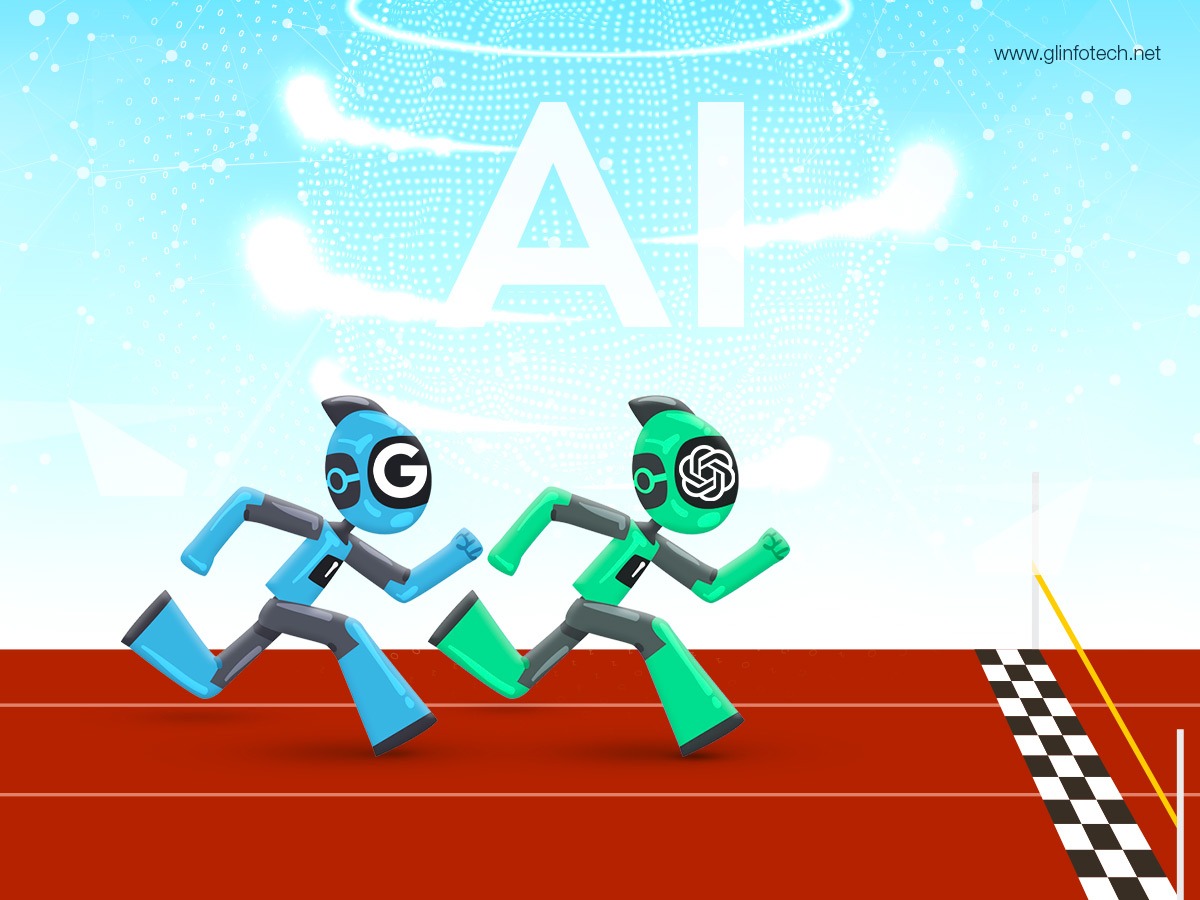
ChatGPT And Google Bard AI Running In A Race.
ChatGPT And Google Bard AI

In the ever-evolving technological landscape, artificial intelligence is being used to increase efficiency and accuracy in a variety of tasks. Google’s Bard AI is one such example that has the potential to revolutionize how we communicate and do business. Do you know the fascinating facts about Google AI? Just imagine when Google AI’s top-tier intervention Google bard chatbot competes with Microsoft ChatGPT. Google’s “bard” is going to span over time, and a new artificial intelligence chatbot of Google is getting ready for a great way back according to the hope of Google CEO Sundar Pichai.

In fact, Google Bard is the most delinquent tool of Google AI that can augment the way we do business nowadays. For one thing Google AI’s invention Google Bard is comparable with ChatGPT. Although, language processing and visual image-generative AI chatbots like Dall-e2 are attaining popularity swiftly.

How does Google’s bard AI become a formidable rival by backing Microsoft ChatGPT?

Relying on the fact that ChatGPT is a powerful variant of GPT, abbreviated as Generative Pre-training Transformer which is developed for easier human-like conversational language generation by the influence of Google AI whereas Google Bard is the most advanced Google AI which responds to the huge success of par backed with Microsoft ChatGPT. Whenever a user gives input, Chatbots tries to respond as a human does and that is the human-oriented conversation most clients desire.

Since its launch in 2004, Google’s web search engine has become an integral part of daily life for millions of people. With its world-class artificial intelligence, it continues to revolutionize technology and the way we communicate with each other. In fact, Google’s chatbots have become one of the most popular features of its messenger service, Gmail. Additionally, BING is one of the world’s most successful artificial intelligence.

Introduction of Bard

Google Bard is going to make a blow after being tested by a group of trusted testers. This is the latest announcement. As per that, we can imagine the bard’s influence, which might be going into effect. Google claims that it would be a language that can be understood even by children which can help to organize services and other kinds of mundane tasks by providing tips or ideas for planning food or trips.
Google Bard AI
Google Bard AI

Google’s Bard is a web search engine designed to help users find information more quickly. Bard will cover a broad range of topics, including news, weather, sports, entertainment, and more. Bard will be fast, with a search time of just a few seconds. It will provide helpful suggestions to help you find the information you’re looking for. Bard will be available in every language.

Google’s bard AI is a type of AI that is designed to understand natural language. It uses deep learning and natural language processing (NLP) to understand and respond to spoken and written language. With bard AI, computers can understand the meaning and context of written and spoken language, allowing them to respond in a meaningful way.

The most impressive aspect of bard AI will be its ability to learn from its mistakes. By using a technique called “reinforcement learning”, bard AI can identify and correct its mistakes, making it more accurate and efficient over time. This means that bard AI can learn from its mistakes and become more accurate and reliable at understanding and responding to natural language.

Google’s bard AI is also capable of recognizing and generating images. This means that computers can understand the meaning behind images, allowing them to respond in a meaningful way. Finally, bard AI will be configured to understand and generate music.

In effect, Bard is also a language-processing artificial intelligence that would be an extension of Microsoft ChatGPT.
Google Bard AI vs ChatGPT
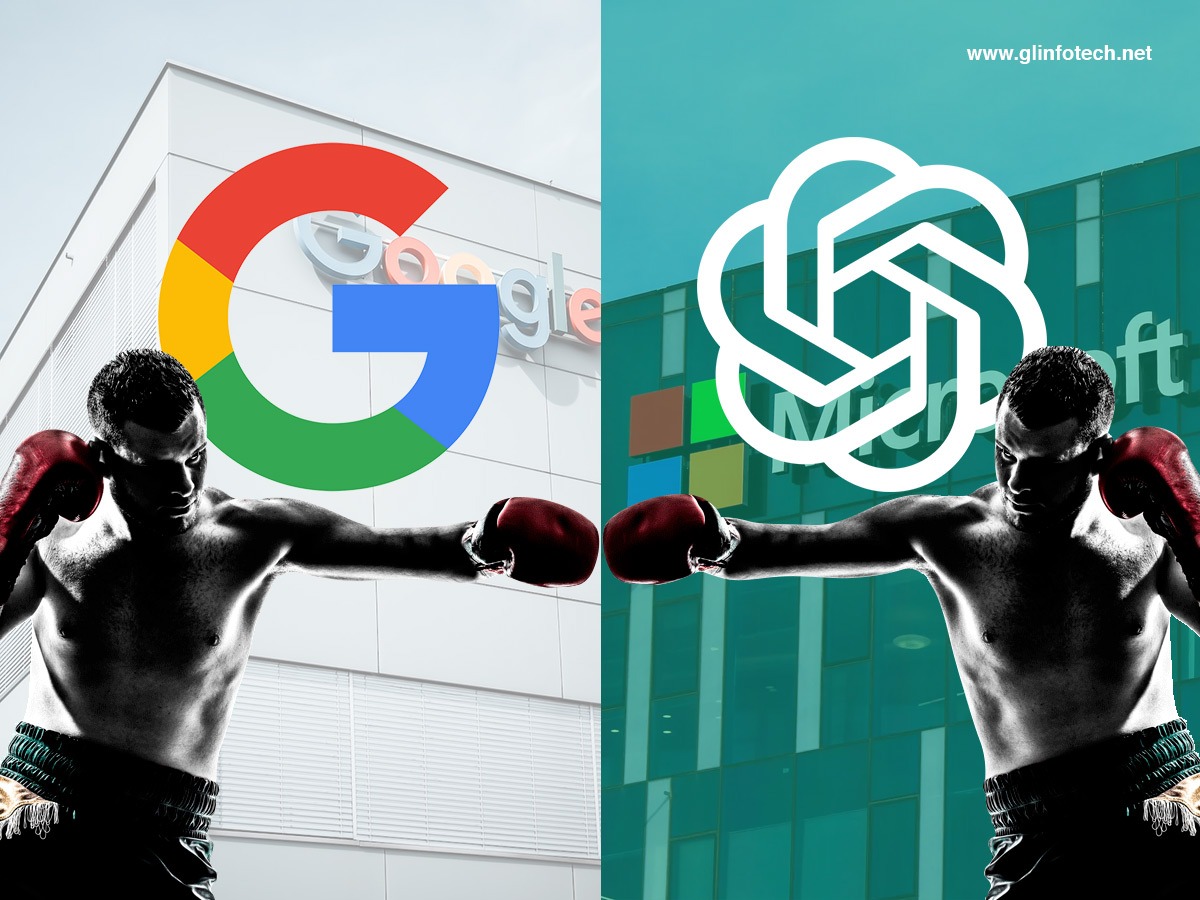
Google Bard vs ChatGPT

Features of Google Bard

  • Bard is powered by LaMDA, which is a Language Model for Dialogue Applications.
  • Bard comprises power, intelligence and creativity
  • Provide fresh and high-quality responses
  • Capable of generating curiosity.
  • Explained the query about “how to explain new discoveries made by  NASA’s James Webb Space Telescope to a 9-year-old, or learn more about the best strikers in football right now.”

How did Google AI benefit Bard?

In light of this new technology, businesses need to think about how they are doing their work, what products and services they offer, and how AIs like Bard and ChatGPT could enrich better customer experiences with the betterment of workflow.

Let’s go for a ride to explore the implications of Google AI.

● Compiling research

● Drafting marketing content

● Brainstorming ideas

● Writing computer code

● Automating parts of the sales process

● Delivering aftercare services when customers buy products

● Providing customized instructions

● Streamlining and enhancing processes using automation

● Translating the text from one language to another

● Smoothing out the customer onboarding process

● Increase customer engagement thereby leading to improved loyalty and retention

Future of ChatGPT

Before featuring in the future of ChatGPT, we have to gather an idea about the difference and after all, you can able to think it off. In the same context in which personality is developed based on the surroundings where you have born and brought up and mingling persons, the main difference between Google Bard and ChatGPT relies upon the training on sources of disparate data they have attained and where they have garnered. Chatbots that are trained in a well-mannered system can deliver accurate results. According to the current news updates, Google is trying to generate more actionable conversational AI features by strategizing the search modules by enhancing all the related sources. So, Google seems that in terms of computational power and potential use, both Google Bard and ChatGPT show slight differences.

Earlier, while ChatGPT has been revolutionized and trained on all of the information pinnacles in the world itself, conversely Google Bard synthesizes the captures the billions of bytes of data that illustrate the different perspectives. Meanwhile, Bard will be careful to give real-time and precise information in an easily digestible conversational mode. The release of ChatGPT has triggered a global AI arms chase, wherein tech leaders have been hurrying their AI research to expand tools like ChatGPT which will naturally replace authenticity later on. Numerous alternatives to ChatGPT are only in their nascent stages or have biases, and build mixed outcomes at their finest. The end goal of growing conversational AI products for example ChatGPT and Google Bard is to optimize the generation of the greatest handy details that are at similar time actionable too.

It’s important to understand what could happen if these technologies take over; otherwise, you may find yourself struggling to keep up with changes in the industry.

Let’s see in the next few months how Bard will play a role against ChatGPT in producing optimized and customized results for all kinds of user queries.

Web Design & Development Ecommerce Web Development ERP Software Development

Mobile App Development Digital Marketing SEO Graphic Design

Latest Blogs
Why Great Content Is No Longer Enough & What Beats It In AI Search
There was a time when ranking high meant your content would consistently reach searchers. Well, think again. Search visibility no longer works that way. Great content is no longer enough, because AI search engines now rank websites based on their contextual relevance and subject matter instead of using basic keyword metrics.  So, if you are still sticking to old-school SEO techniques believing they will get your website ranked, it is high time you made a few strategic changes to your semantic SEO strategy.  Why AI Search Thinks Differently If keyword matching and backlinks were the constraints that defined the visibility in traditional seo formats, today’s AI-powered search engines evaluate the intent behind a search query. Instead of merely scanning for repeated keywords, they examine how clearly the topic of the content is explained. The addition of schema markup enables search engines to comprehend how contents are organized and how it benefits users. With this approach, both content creators and readers benefit equally, leaving little room for keyword stuffing or other outdated SEO practices.  What Beats Great Content Today? Beyond keyword matching, what matters the most is semantic relevance i.e how true or relevant is the body of content. Websites that perform well in AI search usually provide: Clear topic structure Related subtopics and supporting information User-focused answers Natural keyword variations Strong topical authority For example, an article about “Fitness Training” should include workout routines, strength building and related topics, whereas an article about “Digital Marketing” must cover SEO, content marketing, social media strategy, and other key areas of the subject. The Importance of User IntentModern search engines have evolved from relying solely on exact-match keywords to becoming increasingly intent-driven. Apparently, the rankings reflect this shift.  So, what is the takeaway from this shift? Your content strategy should give importance to answering real questions and focus less on keyword counts. Elements such as FAQs, contextual headings, informative subtopics and structured data SEO help AI-powered search engines comprehend content in a better way. The Future of Search VisibilityBrands that still follow outdated SEO methods may find it difficult to compete in advancing search environments. Hence, semantic SEO is now an essential element of contemporary content strategy and cannot be considered optional. The future belongs to websites that build credibility by creating appropriate content instead of tracking individual keywords. Alongside context-rich and intent-focused content, organizations must apply effective content distribution to improve visibility across digital platforms. Brands that adapt early will have a stronger chance of remaining visible in AI-powered search results. Stay Relevant, Rank Better The changing nature of search algorithms means that today’s successful strategies may not stay effective forever. The present nature of AI search is to rank those websites or content that contain valuable information. Hence, corporations aspiring to rank at the top of Google search results must create purposeful and well-organized content instead of depending on outdated SEO methods. At Glinfotech, we help brands climb higher in Google rankings through expert, result-driven SEO strategies designed for modern AI-powered search environments. FAQ'S Why is great content no longer enough for SEO?Great content alone is no longer enough for SEO because AI search engines now understand, summarize and present information directly to users.   What matters more than content in AI search? In AI search, brand trust, digital footprint authority, and entity visibility matter significantly more than written content.  What is content retrievability in AI search? Content retrievability in AI search refers to how easily AI systems can find, understand, and use your content. How can you optimize content for AI search?  You can optimize content for AI search by creating context-rich and user-focused content.  How does content distribution impact AI search visibility? Content distribution improves AI search visibility by helping your content reach more platforms, audiences and websites. 
May 15, 2026
AI Search Growth: How To Benchmark Website Performance In Your Industry
Have you ever wondered why some websites consistently appear in AI generated search results while others struggle to gain visibility? As search behaviour continues to change rapidly, businesses are now paying closer attention to how websites perform across AI driven search platforms. Traditional SEO still plays an important role, but AI search optimization has become equally important as search engines and AI tools continue to provide more direct and personalized answers to users. The answer often comes down to having a strong AI SEO strategy supported by proper keyword performance tracking and regular website analysis. Businesses that understand how their website performs compared to competitors are usually in a better position to improve rankings, increase visibility, and create stronger user engagement. This shift has also made it necessary for brands to rethink how they measure online performance and strengthen their digital presence. Why Benchmarking Website Performance Matters Benchmarking helps businesses understand where they stand within their industry. Instead of simply monitoring website traffic, companies now analyse how their content performs across search engines, AI powered search tools, and voice search platforms. This gives a clearer picture of how users discover information online.A proper benchmarking process can help businesses: Understand how competitors perform in search results Track keyword visibility and ranking changes Identify content gaps and optimisation opportunities Improve website authority and user experience Build a stronger AI SEO strategy for long term growth By comparing website performance with industry standards, businesses can make more informed decisions instead of relying on assumptions. The Role of Keyword Performance Tracking Keyword performance tracking remains one of the most important parts of modern SEO and AI search optimization. Businesses need to know which keywords bring traffic, which topics users search for most often, and how rankings change over time.Tracking keyword performance also helps brands understand whether their content is visible in AI generated summaries and search recommendations. Instead of focusing only on high volume keywords, businesses now pay attention to conversational search phrases and question based queries because AI platforms often prioritise natural language searches. For example, a company targeting “AI SEO strategy” should also optimise for related search terms such as: How to improve AI search visibility Best AI search optimization techniques Website benchmarking for SEO growth Tools for keyword performance tracking This approach improves the chances of appearing in different types of search experiences. Building a Strong AI SEO Strategy An effective AI SEO strategy focuses on creating useful, well structured, and trustworthy content. Search engines and AI platforms prefer content that answers user questions clearly and provides genuine value. Some important areas businesses should focus on include: Creating easy to understand and informative content Updating older pages regularly Improving website speed and mobile usability Using structured headings and organised formatting Monitoring analytics and keyword trends consistently Businesses should also regularly review competitor websites to understand changing search trends within their industry. Final Thoughts AI search optimization is becoming an essential part of digital growth for modern businesses. As search behaviour continues to evolve, companies that actively monitor keyword performance tracking and benchmark their website performance will have a stronger advantage in their industry. A clear AI SEO strategy not only improves visibility but also helps businesses create better user experiences and long term online growth. Understanding how your website performs today is the first step towards building stronger search visibility for the future. FAQs How to improve my brand visibility with AIO? You can improve brand visibility with AIO by creating helpful content, using proper keywords, improving website speed, and following a strong AI SEO strategy. Why is website performance important for AI search visibility? Good website performance helps AI search platforms understand, rank, and display your content more effectively in search results. How do you measure performance in AI search? AI search performance is measured through keyword rankings, website traffic, visibility, engagement, and search appearance. Which AI search platforms matter most for website benchmarking? Platforms like Google AI Overviews, Bing AI, voice search, and AI powered search tools are important for benchmarking. Why is competitor comparison important in AI search benchmarking? Competitor comparison helps businesses identify gaps, improve strategies, and understand industry search trends better.
May 12, 2026
Is AI ‘Knowledge’ Trustworthy? Lessons from Wikipedia’s New AI Restrictions
The recent restriction on using artificial intelligence to generate or rewrite content for Wikipedia has raised questions about the platform’s integrity. However, the policy change came at a time when more people were turning to AI tools for quick answers and content creation. This moment reflects how AI knowledge bases are becoming central to how people access and consume information.  So, is AI knowledge trustworthy? Let us find out from the recent developments. What Led to Wikipedia’s New AI Policy Wikipedia’s decision to restrict AI-generated content did not happen suddenly. It was the result of a rapid rise in AI-generated content flooding online platforms. Among the various challenges, AI-generated articles stood as primary concern, compelling the company to make necessary changes in  their policy. However the factors that lead to this situation were : Verifiability No original research Content integrity Wikipedia maintained some acceptance of AI technology even after applying few limitations. Apparently, the system allows restricted access to machine translation and copyediting tools, which need human editors to check every result. The Bigger Picture (AI Knowledge Base Problem) This issue is not limited to Wikipedia. The widespread adoption of AI knowledge bases in search engines, chatbots and content tools has changed the way people obtain and interpret information. Apparently, these systems have turned into the primary source for quick answers, reducing the need to juggle between multiple search engines.  However, this convenience brings certain generative AI limitations to light. Unlike curated platforms or academic databases that cite the sources and do fact checking, AI knowledge bases often generate responses without disclosing the sources of the information that are gathered. Besides, the output solely relies on patterns that machine learning algorithms acquired during training on extensive datasets, as there are no traceable sources to verify the results. This has significantly reduced the trust in AI generated content among the users, forcing big organizations like Wikipedia to reinvestigate their policy. Finding the Balance Between AI and Human Oversight Though AI knowledge can give you swift responses, its trust remains a concern. The case of Wikipedia is a typical example of how humans' reasoning abilities dominate over mere machine outputs. AI systems are capable of helping with summarizing tasks or creating content, however they often produce inaccurate or false content without verification, which means they shouldn't be trusted as sole sources of authentication. At the same time, completely rejecting AI may limit efficiency and innovation. A more balanced approach to adopt would be the human–AI collaboration, where AI supports content creation, but humans foresee them by verifying facts, sources and context. Key Takeaways from Wikipedia’s AI Policy When a tech giant like Wikipedia questions the authenticity of AI generated content, it brings into question, “Are AI knowledge bases truly reliable?”. This concern underlines the growing gap between the convenience it provides, the trust in AI and the need for verified, trustworthy information. As their trustworthiness is shaped by generative AI limitations, particularly the lack of transparency and verifiability, it is necessary to validate their outputs through credible sources. So, what we can learn from the recent development involving Wikipedia is that AI should be perceived as a support system, not a replacement for human cognitive abilities. FAQ 1. Has Wikipedia been affected by AI?    Answer: Yes, AI has definitely impacted Wikipedia, which is evident in the policy changes that have been put into place. 2.What is more trustworthy, AI or Wikipedia?     Answer: Though neither provides completely reliable information, Wikipedia is considered a better option because of its foundation in human verification and transparency.  3.Is Wikipedia a credible source of information?     Answer: Wikipedia is a useful starting point for research, but it is typically not cited as an authoritative source in academic or professional work.  4. How trustworthy is AI information?     Answer: AI-generated content can be unreliable in some cases because it relies on patterns rather than fact checking.  5. What are Wikipedia's new ai restrictions?     Answer : English Wikipedia has officially prohibited the use of Large Language Models (LLMs) for generating or rewriting article content.
April 27, 2026
The Future of E-commerce: AR/VR Shopping Experiences Explained
What if you could try a product before buying it without ever stepping into a store? What if online shopping felt as real and interactive as walking through a showroom? And what if you could explore an entire store from your home, experiencing products in a way that feels almost physical? These questions are no longer hypothetical. With the rise of augmented reality in e-commerce and virtual reality shopping, the digital retail space is becoming more immersive and experience driven. But to understand this shift clearly, it is important to know the difference between the two: Augmented reality = real world + digital elements Virtual reality = completely digital world In simple terms, augmented reality enhances what you already see around you, while virtual reality replaces it with an entirely new environment. Together, they are transforming how people interact with products online. Bridging the Gap with Augmented Reality One of the biggest advancements shaping online shopping is augmented reality in e-commerce. This technology allows customers to place products into their real world environment before making a purchase. Whether it is visualizing décor, accessories, or lifestyle products, the concept of an augmented reality store creates a seamless blend between digital and physical shopping. Why augmented reality is transforming e commerce: Enables real time product visualization in personal spaces Reduces uncertainty and builds buyer confidence Makes online shopping more interactive and engaging Helps businesses lower product return rates Entering the World of Virtual Reality Shopping While augmented reality enhances the real world, virtual reality shopping creates a completely new one. Customers can step into a fully immersive digital store, walk through collections, and interact with products just like they would in a physical setting. This not only makes the shopping journey more engaging but also allows brands to create visually rich and memorable environments. Key benefits of virtual reality shopping: Immersive and lifelike shopping environments Better product interaction and exploration Stronger emotional engagement with brands A more enjoyable and experience focused journey Virtual Reality Fashion: A New Way to Explore Style Among the most exciting innovations is virtual reality fashion, which is changing how people discover and choose clothing. Instead of imagining how an outfit might look, customers can try it on in a virtual environment. This allows them to see how styles fit, move, and appear from different angles, making the entire process more intuitive. What makes virtual reality fashion stand out: Virtual try ons without physical limitations Easy experimentation with different styles and combinations Clear understanding of fit and appearance Highly personalized shopping experiences Why Immersive Experiences Matter The rise of the augmented reality store and advancements in virtual reality shopping highlight a clear shift in consumer expectations. Modern shoppers are looking for experiences that feel engaging and meaningful. By integrating augmented reality in e-commerce, brands can go beyond basic selling and create deeper connections with their audience, making every interaction more memorable. Challenges and the Road Ahead Despite the many advantages, adopting these technologies comes with challenges such as development costs, technical complexity, and accessibility. However, as technology continues to evolve, these barriers are gradually decreasing. More businesses are now exploring ways to integrate immersive solutions into their platforms, making them more widely available. The Future of Shopping E-commerce is moving towards a future where experience is just as important as convenience. With the growth of virtual reality fashion, the expansion of virtual reality shopping, and the continued evolution of the augmented reality store, digital retail is becoming more immersive than ever. As augmented reality in e-commerce continues to advance, shopping will no longer feel distant. It will feel real, engaging, and deeply connected to the customer’s world. FAQ 1. What is augmented reality (AR)?    Augmented reality is a technology that adds digital elements to the real world. It allows users to see virtual products in their real environment, such as placing furniture in a room or trying on accessories using a smartphone. 2.What is VR?      Virtual reality is a technology that creates a completely digital environment. Users can enter this virtual space and interact with products or surroundings as if they were physically present, usually with the help of a headset. 3.How does augmented reality (AR) differ from virtual reality (VR)?      Augmented reality enhances the real world by adding digital elements, while virtual reality replaces the real world with a fully digital environment. In simple terms, AR adds to reality, whereas VR creates a new reality. 4.What is the Role of AR and VR in eCommerce?      Augmented reality and virtual reality make online shopping more interactive and engaging. They help customers visualize products, explore virtual stores, and make better purchase decisions, improving overall customer experience and satisfaction. 5.How does AR improve online shopping experiences?     Augmented reality improves online shopping by allowing customers to see how products look in real life before buying. This reduces uncertainty, increases confidence, and helps customers make more informed decisions, leading to fewer returns.
April 23, 2026