> Ecommerce Website Development
Ecommerce Website Development
The Future of E-commerce: AR/VR Shopping Experiences Explained
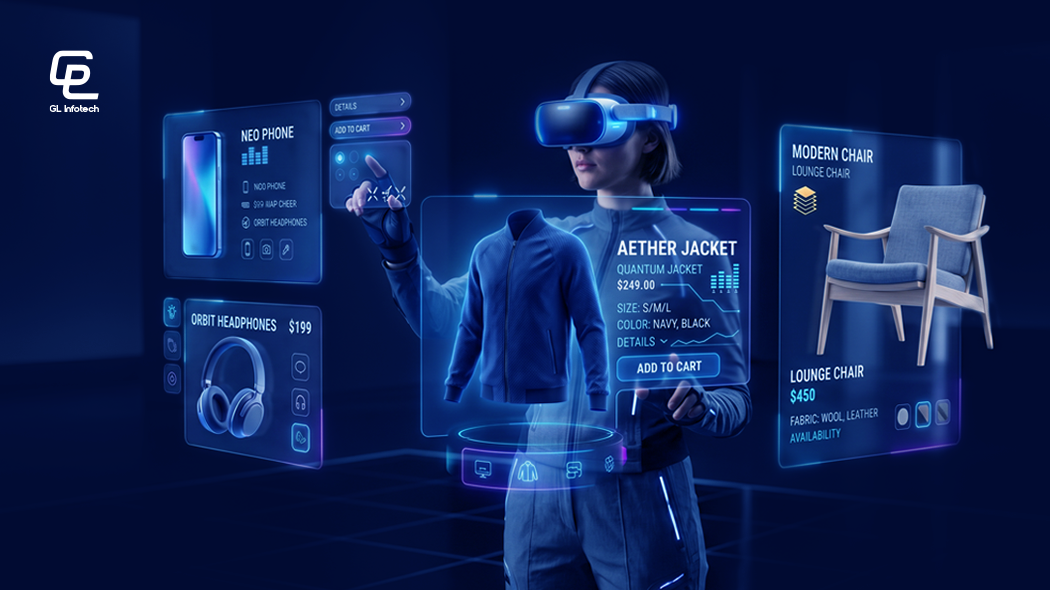
What if you could try a product before buying it without ever stepping into a store? What if online shopping felt as real and interactive as walking through a showroom? And what if you could explore an entire store from your home, experiencing products in a way that feels almost physical? These questions are no longer hypothetical. With the rise of augmented reality in e-commerce and virtual reality shopping, the digital retail space is becoming more immersive and experience driven. But to understand this shift clearly, it is important to know the difference between the two: Augmented reality = real world + digital elements Virtual reality = completely digital world In simple terms, augmented reality enhances what you already see around you, while virtual reality replaces it with an entirely new environment. Together, they are transforming how people interact with products online. Bridging the Gap with Augmented Reality One of the biggest advancements shaping online shopping is augmented reality in e-commerce. This technology allows customers to place products into their real world environment before making a purchase. Whether it is visualizing décor, accessories, or lifestyle products, the concept of an augmented reality store creates a seamless blend between digital and physical shopping. Why augmented reality is transforming e commerce: Enables real time product visualization in personal spaces Reduces uncertainty and builds buyer confidence Makes online shopping more interactive and engaging Helps businesses lower product return rates Entering the World of Virtual Reality Shopping While augmented reality enhances the real world, virtual reality shopping creates a completely new one. Customers can step into a fully immersive digital store, walk through collections, and interact with products just like they would in a physical setting. This not only makes the shopping journey more engaging but also allows brands to create visually rich and memorable environments. Key benefits of virtual reality shopping: Immersive and lifelike shopping environments Better product interaction and exploration Stronger emotional engagement with brands A more enjoyable and experience focused journey Virtual Reality Fashion: A New Way to Explore Style Among the most exciting innovations is virtual reality fashion, which is changing how people discover and choose clothing. Instead of imagining how an outfit might look, customers can try it on in a virtual environment. This allows them to see how styles fit, move, and appear from different angles, making the entire process more intuitive. What makes virtual reality fashion stand out: Virtual try ons without physical limitations Easy experimentation with different styles and combinations Clear understanding of fit and appearance Highly personalized shopping experiences Why Immersive Experiences Matter The rise of the augmented reality store and advancements in virtual reality shopping highlight a clear shift in consumer expectations. Modern shoppers are looking for experiences that feel engaging and meaningful. By integrating augmented reality in e-commerce, brands can go beyond basic selling and create deeper connections with their audience, making every interaction more memorable. Challenges and the Road Ahead Despite the many advantages, adopting these technologies comes with challenges such as development costs, technical complexity, and accessibility. However, as technology continues to evolve, these barriers are gradually decreasing. More businesses are now exploring ways to integrate immersive solutions into their platforms, making them more widely available. The Future of Shopping E-commerce is moving towards a future where experience is just as important as convenience. With the growth of virtual reality fashion, the expansion of virtual reality shopping, and the continued evolution of the augmented reality store, digital retail is becoming more immersive than ever. As augmented reality in e-commerce continues to advance, shopping will no longer feel distant. It will feel real, engaging, and deeply connected to the customer’s world. FAQ 1. What is augmented reality (AR)?    Augmented reality is a technology that adds digital elements to the real world. It allows users to see virtual products in their real environment, such as placing furniture in a room or trying on accessories using a smartphone. 2.What is VR?      Virtual reality is a technology that creates a completely digital environment. Users can enter this virtual space and interact with products or surroundings as if they were physically present, usually with the help of a headset. 3.How does augmented reality (AR) differ from virtual reality (VR)?      Augmented reality enhances the real world by adding digital elements, while virtual reality replaces the real world with a fully digital environment. In simple terms, AR adds to reality, whereas VR creates a new reality. 4.What is the Role of AR and VR in eCommerce?      Augmented reality and virtual reality make online shopping more interactive and engaging. They help customers visualize products, explore virtual stores, and make better purchase decisions, improving overall customer experience and satisfaction. 5.How does AR improve online shopping experiences?     Augmented reality improves online shopping by allowing customers to see how products look in real life before buying. This reduces uncertainty, increases confidence, and helps customers make more informed decisions, leading to fewer returns.
April 23, 2026
E-commerce in 2025: Key Trends Shaping the Future
As we move towards 2025, the future of e-commerce will be driven by groundbreaking innovations, technological advancements, with a prominent shifting of consumer expectations. From AI to automation, here are the key e-commerce trends 2025 that will shape the future of online retail. AI-Powered Shopping Experiences In 2025, AI in e-commerce will dominate the landscape, offering hyper-personalized shopping experiences that cater to individual preferences. AI-driven tools will enable brands to provide tailored product recommendations, enhanced customer service through virtual assistants, will streamline the shopping journey for better engagement and conversion. Metaverse and Virtual Commerce The future of e-commerce will expand into immersive environments like the metaverse. By 2025, virtual stores and digital marketplaces in 3D spaces will become mainstream, allowing customers to shop, make virtual trials, and engage with brands in a plethora of  innovative, interactive ways. Sustainability as a Core Value Sustainability will be a top priority among e-commerce trends for the year 2025, where consumers will demand more eco-conscious products and business practices. Brands will devote their focus on sustainable sourcing, packaging, and carbon-neutral shipping, ensuring that every aspect of the supply chain will reflect on environmental responsibility. Advanced AR/VR Shopping Augmented Reality (AR) and Virtual Reality (VR) will literally  revolutionize the way consumers shop online. In 2025, mobile commerce trends will heavily feature AR and VR tools, allowing customers to try on clothes, test furniture in their living rooms, and visualize beauty products before making a purchase, offering more confidence, ultimately resulting in reduced return rates. Mobile App Development Voice and Visual Search Optimization As mobile commerce trends evolve, voice and visual search technologies will play a pivotal role. Consumers will use photos or voice commands to search for products, making shopping faster and more intuitive. Brands will continually optimize their sites for these features. Blockchain and Crypto Integration In 2025, blockchain and cryptocurrency will reshape e-commerce automation by providing more secure transactions, transparent supply chains, and faster payments. We can expect a rapid increase in businesses accepting digital currencies and blockchain-based loyalty programs that will enhance customer engagement and retention. Hyper-Localized Shopping E-commerce innovations will see a rapid shift to location-based services that will create hyper-localized shopping experiences. By 2025, e-commerce platforms will leverage geo-targeting to offer region-specific products, promotions, and pricing, making the shopping experience more relevant and personalized to the consumer’s needs. Frictionless Payment Solutions In 2025, e-commerce automation will streamline payment processes, allowing quicker and secure transactions through biometrics, digital wallets, and one-click payments. The mobile e-commerce trends will further benefit from these seamless payment experiences, making it easier for consumers to shop on the go. Subscription Models and Personalized Offerings The subscription-based model will continue to evolve in 2025, with brands offering more personalized plans based on customer preferences. Businesses will leverage AI and big data to tailor subscription boxes and services, boosting customer loyalty and retention. Automated and Drone Delivery By 2025, e-commerce logistics will embrace automation, with drones and autonomous vehicles handling last-mile deliveries. Faster options like same-day or drone drop-offs will reshape customer expectations, making shopping truly on-demand. Mobile App Development The future of e-commerce in 2025 is full of exciting innovations, sustainability, and seamless customer experiences. To stay competitive, businesses must embrace e-commerce trends 2025, including AI in e-commerce, automation, and mobile commerce. Partner with the right ecommerce web development company to adapt and thrive in this evolving landscape.Ready to evolve? Partner with GL Infotech, your trusted ecommerce web development company, and leverage our expertise to stay ahead of the curve. Contact us today to get started!
October 22, 2024
The Benefits of Integrating ERP with E-commerce Systems
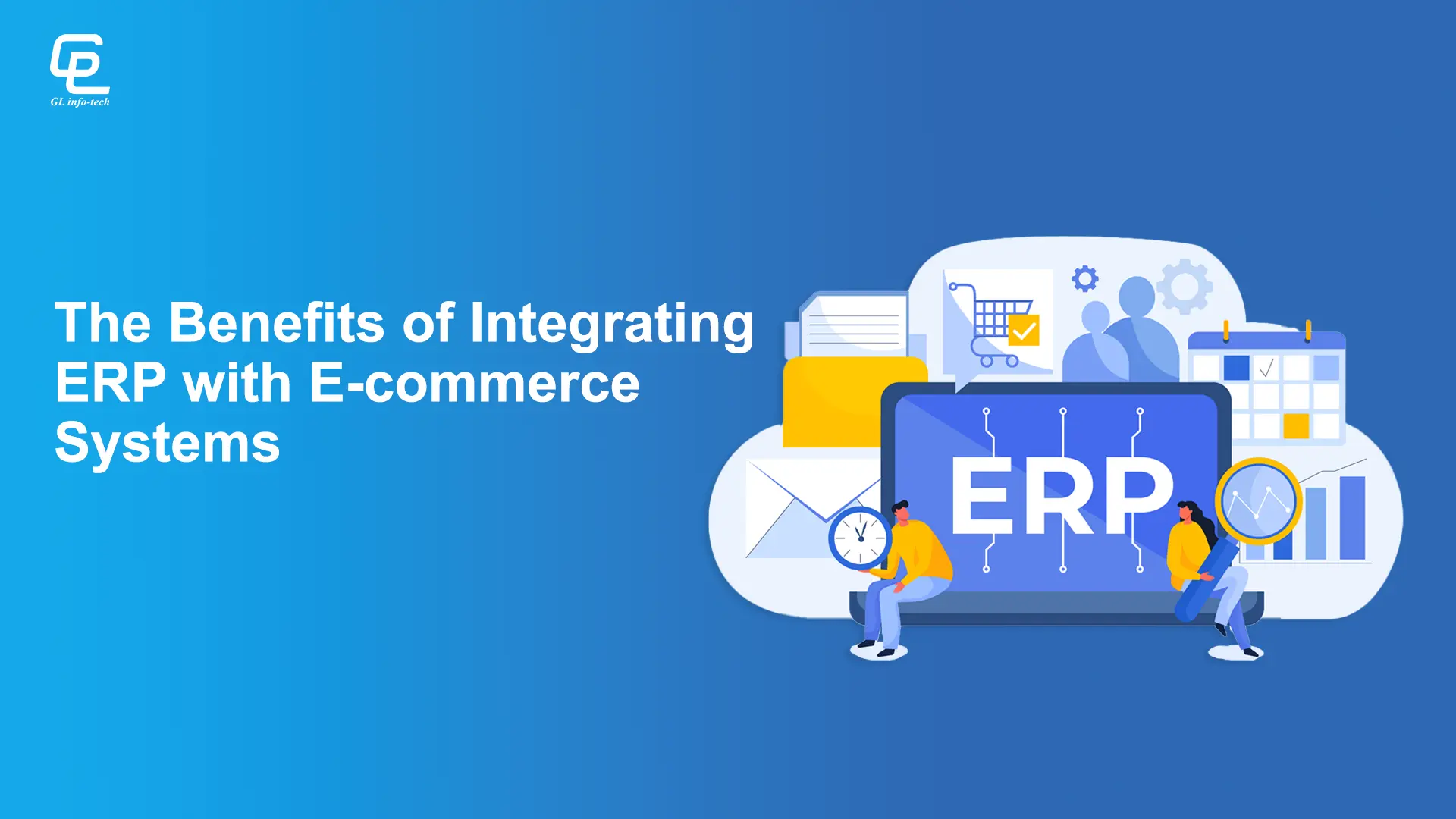
In today’s fast-paced digital economy, businesses are continuously seeking ways to enhance operational efficiency, improve customer experience, and drive growth. One of the most effective strategies to achieve these goals is through ERP and e-commerce integration. This combination not only streamlines operations but also fosters a seamless connection between various business functions. Let’s explore the key benefits of integrating ERP with e-commerce systems. 1. Streamlined Operations Integrating ERP with e-commerce systems facilitates the flow of information across different departments. By consolidating data from sales, inventory, finance, and customer service, businesses can eliminate data silos and improve collaboration. This integration ensures that all teams have access to real-time data in ERP, enabling them to make informed decisions quickly. For instance, when a customer places an order online, the ERP system can automatically update inventory levels and trigger the fulfillment process, reducing manual errors and saving time. This is particularly beneficial for ERP software for retail businesses, which requires precise coordination between various functions. Read More: Why Custom Software Solutions Are Key for Modern Enterprises 2. Enhanced Customer Experience A unified ERP and e-commerce solution allows businesses to provide a more personalized and responsive customer experience. With access to comprehensive customer data, businesses can tailor marketing efforts, offer personalized product recommendations, and improve customer service. For example, integrating customer purchase history from the ERP system into the e-commerce platform enables businesses to send targeted promotions and relevant product suggestions, leading to higher conversion rates and customer satisfaction. This is an essential aspect of automating e-commerce with ERP. ERP Software Development 3. Improved Inventory Management Inventory management is a critical aspect of e-commerce operations. An integrated ERP system provides real-time visibility into inventory levels, enabling businesses to manage stock more efficiently. This integration helps prevent stockouts and overstock situations by providing accurate demand forecasts and inventory analytics. As a result, businesses can optimize their inventory levels through inventory management with ERP, reduce carrying costs, and ensure that they can meet customer demand without delays. Also Read: Mobile App Development: Trends Shaping Businesses by the End of 2024 4. Automated Financial Processes Integrating ERP with e-commerce systems automates financial processes, reducing the risk of errors and enhancing accuracy. When an online sale is made, the ERP system can automatically generate invoices, update financial records, and process payments. This automation not only saves time but also ensures compliance with financial regulations. Moreover, real-time financial reporting allows businesses to monitor their financial health and make strategic decisions based on accurate data. This is particularly advantageous for ERP for order management, which requires precise tracking of sales and payments. Also Read: 5 augmenting interventions of AI in digital marketing as a powerful automation weapon 5. Scalability and Flexibility As businesses grow, their operational needs evolve. An integrated ERP and e-commerce system provides the scalability and flexibility required to adapt to changing market demands. Whether launching new products, entering new markets, or expanding sales channels, businesses can easily scale their operations without the need for significant system overhauls. This agility allows companies to respond quickly to opportunities and challenges in the marketplace, making ERP for small businesses a valuable investment. ERP Software Development 6. Data-Driven Insights The integration of ERP and e-commerce systems enables businesses to leverage data analytics for better decision-making. By analyzing sales trends, customer behavior, and inventory turnover, companies can gain valuable insights that drive strategic initiatives. These insights can inform marketing strategies, product development, and inventory management, ultimately leading to improved profitability and competitiveness. The use of e-commerce automation tools combined with ERP systems can enhance these insights even further. 7. Enhanced Security and Compliance With increasing data privacy concerns and regulatory requirements, businesses must prioritize data security and compliance. An integrated ERP system provides robust security measures to protect sensitive customer and financial data. Additionally, it helps ensure compliance with industry regulations by automating reporting processes and maintaining accurate records. Integrating ERP and CRM integration can further enhance customer data security and streamline customer relationship management. An erp software development company can help you with this task. Integrating ERP with e-commerce systems provides significant benefits that enhance operational efficiency, customer experience, and competitiveness. By streamlining processes and leveraging data-driven insights, businesses can achieve sustainable growth in the evolving digital marketplace. As technology advances, this integration becomes essential for thriving in a dynamic environment. As a leading branding agency in India, we specialize in seamless ERP and e-commerce integration. Let us help you unlock your operations' full potential. Contact us today to learn how our expert solutions can transform your business! Common FAQs What is ERP integration in e-commerce?ERP integration in e-commerce refers to the process of connecting ERP systems with online sales platforms to streamline operations, improve data flow, and enhance customer experiences. How does integrating ERP with e-commerce benefit businesses?It enhances operational efficiency, improves inventory management, automates financial processes, and provides valuable insights, leading to better customer service and profitability. Can an ERP system manage inventory and sales for my online store?Yes, ERP systems are designed to handle inventory management, sales tracking, and financial reporting, making them ideal for managing online stores. What challenges are faced during ERP and e-commerce integration?Challenges may include data migration issues, system compatibility, the complexity of integration, and training staff to adapt to the new system. How does ERP integration help with customer experience in e-commerce?By providing real-time data and insights, businesses can personalize customer interactions, improve service levels, and respond quickly to inquiries, thereby enhancing the overall customer experience. Contact Us Web Design & Development Ecommerce Web Development ERP Software Development Mobile App Development Digital Marketing SEO Graphic Design
October 14, 2024
How to Build a Scalable E-commerce Platform
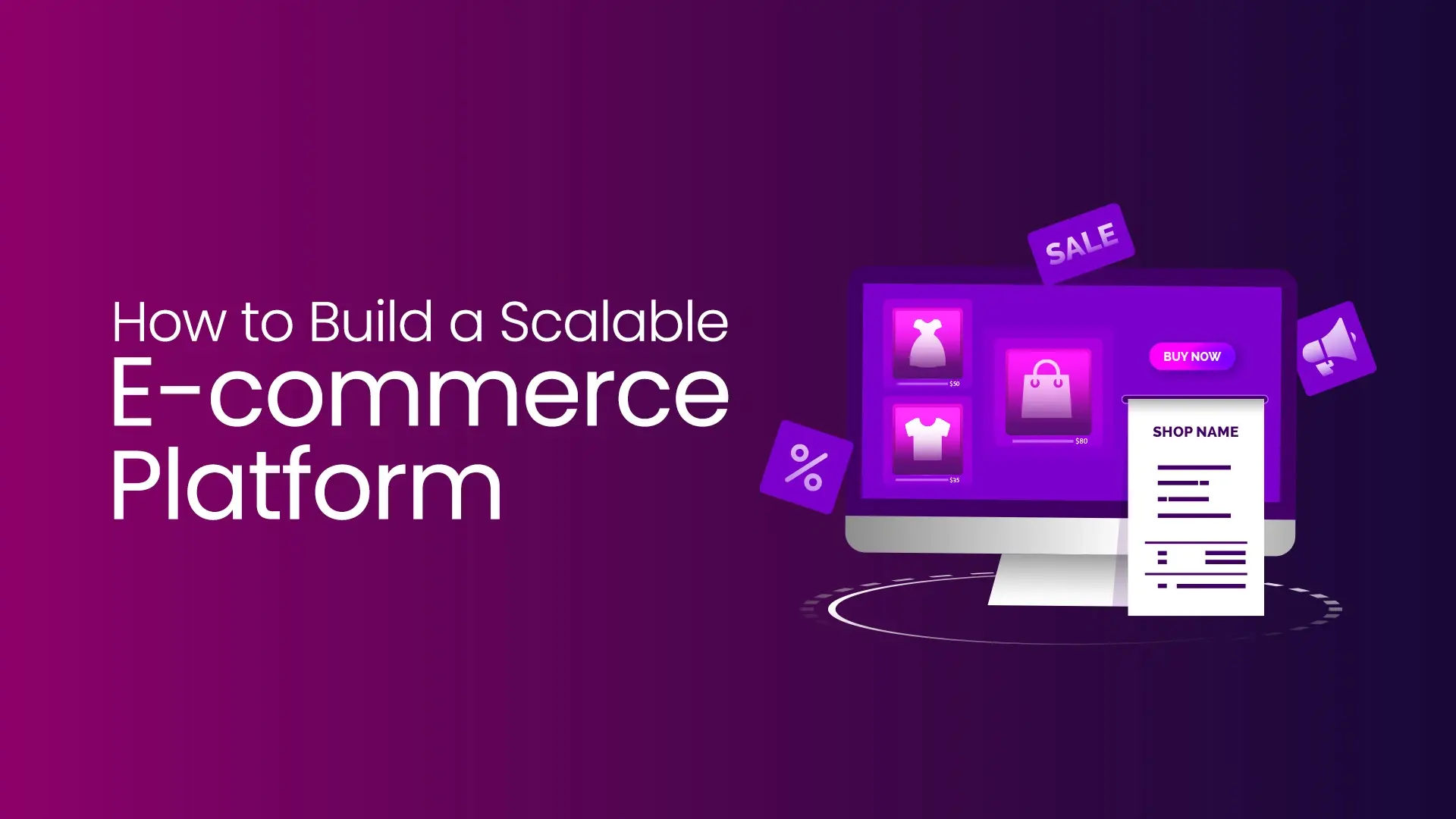
Initially, e-commerce was all about getting essential products at the lowest possible prices. Now, we’re stepping into a captivating new chapter of e-commerce, where emotional products take center stage that hold sentimental value for people. In this era of digital innovation, where shopping online has become a routine, businesses should emphasize crafting aesthetically pleasing, easy-to-use, and powerful e-commerce platforms. Not just that, but it’s equally essential that the e-commerce platform you build with the assistance of an ecommerce website development company is safe, flexible to safeguard customer data, maintain credibility, and facilitate business expansion.  Therefore, by fathoming into the hurdles and executing effective strategies, businesses can set a strong groundwork for their e-commerce platform to thrive. No matter if you’re an entrepreneur, small business owner, e-commerce manager, or a tech enthusiast,  This guide helps you build a scalable e-commerce website that can grow with your business.  Identify Scalability Requirements Be prepared for the growth of your business. In peak times, how many concurrent customers do you expect your platform can handle? Take into account how your product line may expand in the future and make sure your platform can easily handle a large number of products. Make sure the system can effectively manage the processing load by accounting for the anticipated number of sales. Select an Appropriate Technology Stack A scalable e-commerce website's technology stack is its cornerstone. So during the initial phase of the e-commerce development process, think about utilizing a stable framework such as WooCommerce, Shopify, or Magento. These platforms are adaptable and have a high transaction and customer volume handling capacity. To ensure that you can add new features without having to make major overhauls, make sure the platform you choose allows for easy integration with a variety of plugins and APIs.  A cloud-based infrastructure like AWS or Google Cloud can offer the scalability required to handle varying demand for companies anticipating rapid growth. With the help of these services, you can adjust resource levels in response to traffic, so you only pay for what you use. A ecommerce website development company can help you choose the right tech stack. Ecommerce Development Aim for Performance Optimization For e-commerce to succeed, performance is essential. Slow page loads have the potential to turn off visitors. To guarantee peak performance, you should consider the following key strategies: Content Delivery Network (CDN): By using a CDN, you can distribute your content worldwide and save users' load times, no matter where they are.Image Optimization: To improve loading times without compromising quality, use reduced and optimized images.Minify Code: To expedite rendering, minimize the size of your HTML, CSS, and JavaScript files. Use tools like Google PageSpeed Insights to regularly monitor your website’s performance. This helps you identify and fix bottlenecks efficiently. Construct a Robust Security System The risk of cyberattacks increases with the size of your e-commerce platform. It is critical to protect sensitive customer data. Put the following safety precautions into action during ecommerce website development: SSL Certificates: Make sure that SSL certificates are used to encrypt all data sent between users and your platform.Frequent Security Audits: To find vulnerabilities and take proactive measures to fix them, conduct regular security assessments.Compliance Standards: To guarantee safe payment processing and data security, abide by industry standards such as PCI DSS. Ecommerce Development Partner With Our Ecommerce Website Development Company to Ensure Your E-commerce Platform is Built for Growth. Establishing a scalable e-commerce platform is essential for companies trying to expand and change in a competitive industry. Working with a knowledgeable ecommerce website development company like GL Infotech can help you realize your vision. We offer crucial assistance in choosing the best technology stack, maximizing efficiency, and guaranteeing strong security protocols. You can effectively handle more traffic, improve the user experience, and streamline operations with our experience. This collaboration sets up your company for long-term success while also saving time and expenses. With the help of a dependable IT partner, embrace the future of e-commerce and see a dramatic increase in sales and customer satisfaction. Contact Us Web Design & Development Ecommerce Web Development ERP Software Development Mobile App Development Digital Marketing SEO Graphic Design
October 7, 2024